
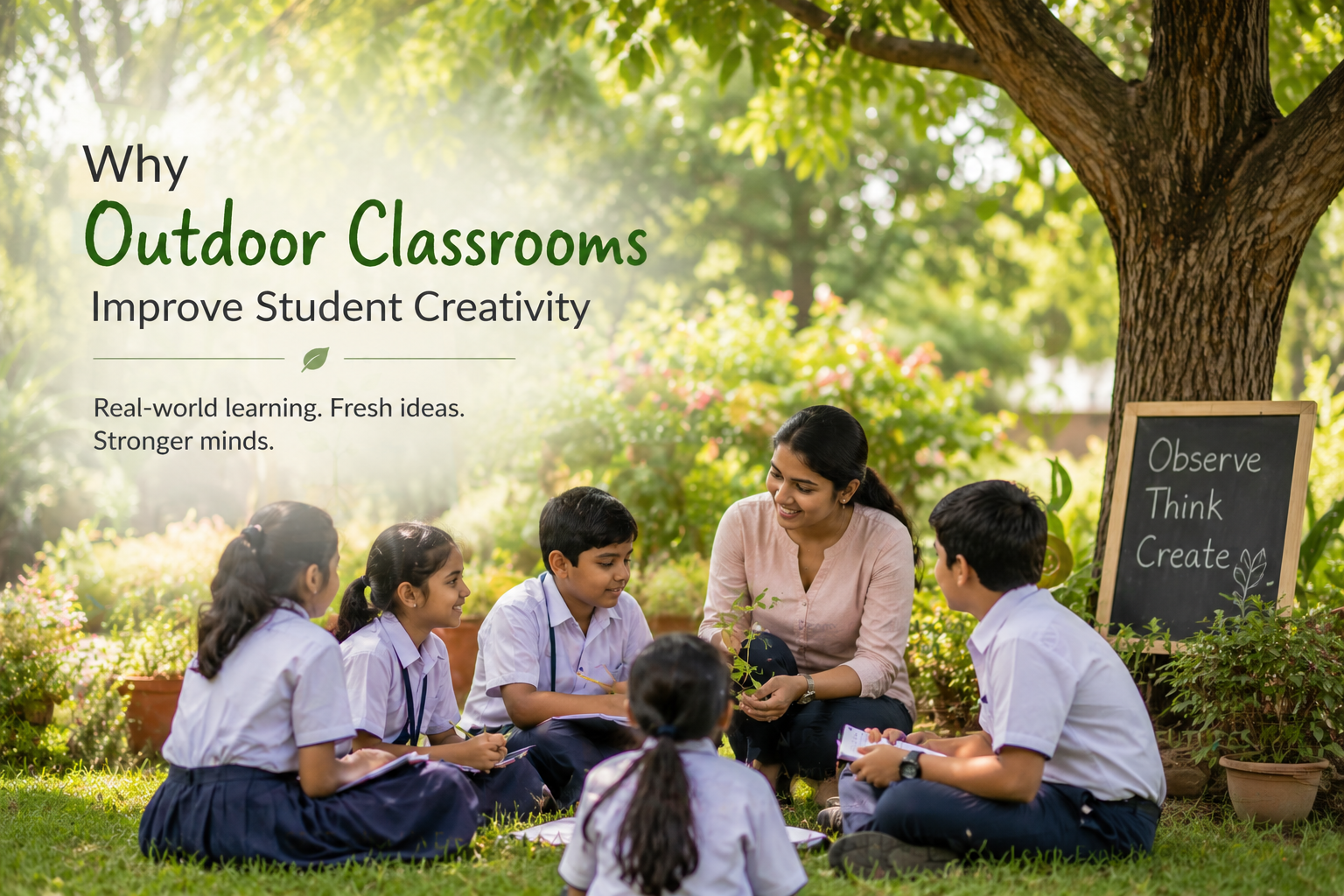
Why Outdoor Classrooms Improve Student Creativity
In today’s fast-evolving education system, creativity is no longer optional—it is a core skill for success. Schools are increasingly adopting innovative teaching methods to nurture creative thinking, and one of the most effective approaches is the use of outdoor classrooms. Especially in a progressive CBSE school in Erode, outdoor learning spaces are becoming a powerful tool to enhance imagination, problem-solving, and overall student development.
What Are Outdoor Classrooms?
Outdoor classrooms are learning environments set outside traditional four walls. These can include gardens, playgrounds, nature zones, or open-air learning spaces where students engage in academic and experiential activities. Unlike conventional classrooms, these environments encourage exploration, interaction, and hands-on learning.
1. Encouraging Imagination and Curiosity
Outdoor classrooms naturally stimulate curiosity. When students are exposed to nature, open spaces, and real-world elements, their minds begin to explore beyond textbooks. Research shows that outdoor learning promotes curiosity-driven and student-centered learning experiences, which are essential for creativity.
In a CBSE school in Erode, students learning science concepts through garden observations or environmental activities can think more creatively compared to traditional rote learning methods.
2. Learning Through Real-Life Experiences
Creativity thrives when students connect theory with practical experiences. Outdoor classrooms allow students to see, touch, and interact with what they learn. This experiential learning improves understanding and helps students generate original ideas.
Studies indicate that outdoor education significantly improves creativity by engaging students in real-life problem-solving activities.
For example, measuring plant growth, observing insects, or conducting experiments outdoors enables students to think independently and creatively.
3. Boosting Problem-Solving Skills
Outdoor environments often present unpredictable situations. Whether it’s a group activity, a team challenge, or a nature-based task, students are required to think critically and adapt quickly.
Outdoor learning encourages students to “think outside the box” and collaborate to find solutions.
In a Best CBSE school in Erode, such activities can include team-based projects, eco-club initiatives, or outdoor experiments that sharpen creative problem-solving skills.
4. Improving Focus and Mental Clarity
Traditional classrooms can sometimes feel restrictive, leading to mental fatigue. Outdoor settings, on the other hand, refresh the mind and improve concentration.
Research shows that outdoor learning reduces stress and improves attention, which directly impacts creative thinking.
When students feel relaxed and mentally refreshed, they are more likely to generate innovative ideas and participate actively in learning.
5. Promoting Collaboration and Communication
Creativity often develops through collaboration. Outdoor classrooms provide ample space for group discussions, teamwork, and interactive activities.
Students learn to share ideas, listen to others, and build on each other’s thoughts—key elements of creative thinking. Outdoor learning environments are known to enhance communication, teamwork, and social interaction skills.
A well-designed CBSE school in Erode integrates outdoor group activities that foster teamwork and creative collaboration among students.
6. Encouraging Freedom of Expression
Unlike structured indoor settings, outdoor classrooms provide a sense of freedom. Students feel less restricted and more open to expressing their ideas.
This freedom allows them to experiment, make mistakes, and learn without fear—an essential condition for creativity. Activities like storytelling, art, drama, or open discussions thrive in outdoor environments.
7. Enhancing Emotional and Social Development
Creativity is closely linked to emotional well-being. Outdoor learning environments improve mood, reduce anxiety, and promote positive thinking.
Studies highlight that spending time in nature enhances emotional health and supports overall development, including creativity.
In a CBSE school in Erode, outdoor classrooms help students feel more confident, motivated, and emotionally balanced—key factors that contribute to creative thinking.
8. Supporting Holistic Learning
Outdoor classrooms support not just academic growth but also physical, emotional, and social development. Activities such as gardening, sports, and environmental projects help students develop a well-rounded personality.
These experiences encourage students to explore their interests and talents, leading to higher creativity and innovation.
9. Breaking the Monotony of Traditional Learning
One of the biggest challenges in education is keeping students engaged. Outdoor classrooms break the routine of sitting in one place for long hours.
This change in environment increases motivation and makes learning more enjoyable. When students enjoy learning, they naturally become more creative and enthusiastic.
10. Preparing Students for Real-World Challenges
Creativity is essential for solving real-world problems. Outdoor classrooms expose students to real-life situations, helping them develop practical skills and innovative thinking.
A forward-thinking CBSE school in Erode focuses on preparing students not just for exams, but for life—by integrating outdoor learning into their curriculum.
Conclusion
Outdoor classrooms are more than just a trend—they are a transformative approach to education. By encouraging curiosity, improving focus, and promoting hands-on learning, they play a crucial role in enhancing student creativity.
For parents seeking a CBSE school in Erode, choosing a school that integrates outdoor learning can make a significant difference in a child’s overall development. These schools not only focus on academic excellence but also nurture creativity, critical thinking, and life skills—preparing students for a brighter and more innovative future.