
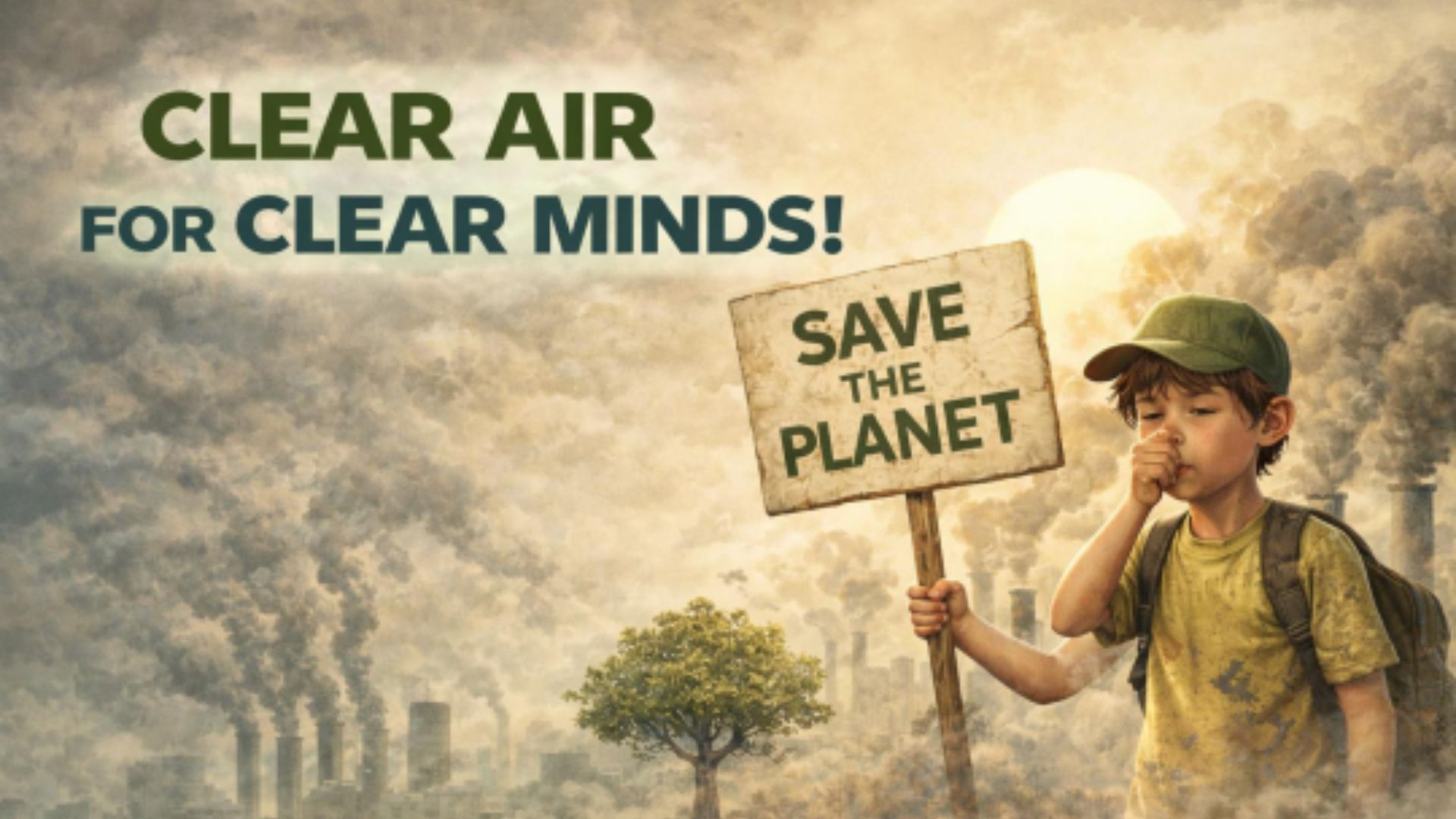
Air Pollution and the Human Brain: The Silent Threat
Air pollution has become one of the most alarming threats to human health and
the environment in the twenty-first century. While most people talk about its effects on
the lungs, heart, and climate, its silent impact on the human brain is often overlooked.
Polluted air does not just harm our bodies—it slowly affects our minds, thoughts, and
behavior.
“The air we breathe shapes the way we think.”
The human brain is one of the most sensitive organs in the body. Pollutants
present in the air, water, and food can enter the bloodstream and eventually reach the
brain. Fine particulate matter such as PM2.5 can penetrate deep into the lungs and travel
through the blood to brain tissues. Long-term exposure to pollution can cause
inflammation in the brain, reduce grey matter, and even speed up the ageing of brain
cells. These changes can lead to memory loss, difficulty in concentrating, mood
disorders, and a decline in overall cognitive performance.
Children are particularly at risk because their brains are still developing.
Neurotoxic substances like lead, mercury, and carbon monoxide can interfere with the
normal development of neurons, affecting learning ability, attention span, and emotional
regulation. Exposure to pollution during early childhood can have long-lasting effects
on intelligence and behavior.
“Protecting children from pollution is protecting the future of humanity.”

Beyond individual health, pollution also affects society as a whole. When air
quality declines, mental clarity reduces. People may feel fatigued, irritated, and less
productive. Creativity and critical thinking can be dulled, making societies less
innovative and more reactive. Living in polluted, noisy, and visually congested
environments can also increase stress and psychological problems, affecting how people
make decisions and interact with others.
“A polluted environment creates a polluted mind.”
To safeguard our brains and future generations, sustainable practices must be
adopted. Reducing vehicle emissions, using clean energy, planting trees, avoiding
burning of waste, and spreading awareness are essential steps. Schools, communities,
and governments must work together to ensure cleaner and healthier surroundings.
In conclusion, air pollution is not just an environmental issue—it is a silent threat
to human intelligence, mental health, and societal progress. By protecting our
environment today, we are protecting our minds and the minds of future generations.
“Clear air is the first step to a clear mind.”
Ms. Sowmiya
Middle School Incharge